
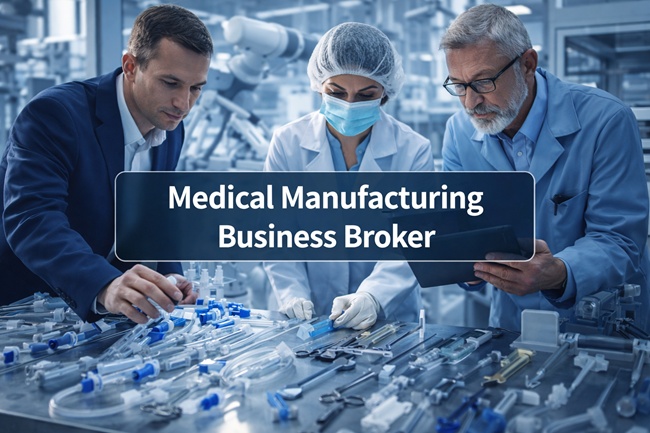
Medical Manufacturing Business Broker
Medical manufacturing companies can be highly attractive acquisition targets, but they are also among the most carefully evaluated businesses in the market. Whether a company manufactures medical devices, components, surgical instruments, diagnostic products, disposables, lab-related products, or other healthcare-related equipment, buyers tend to examine far more than revenue and earnings. They want to understand regulatory exposure, quality systems, customer concentration, manufacturing consistency, product mix, documentation, margin durability, and the overall transferability of the operation after closing.
That is why working with an experienced Medical Manufacturing Business Broker matters. Selling a medical manufacturing company is not the same as selling a general industrial business, a basic distribution company, or a conventional service firm. The industry carries additional layers of operational, compliance, and commercial complexity. Buyers are often looking closely at not only financial performance, but also production capabilities, quality control procedures, certifications, customer relationships, supply chain resilience, and whether the company’s products occupy a defensible place in the market.
Whether you are preparing to sell a medical manufacturing business, acquire a medical products company, merge with a strategic buyer, or simply evaluate what your company may be worth in today’s market, the process benefits from industry-aware guidance. A Neumann & Associates helps owners and buyers navigate lower middle market and closely held business transactions with confidentiality, structure, and a focus on maximizing value.
Medical manufacturing businesses can be compelling because they often serve essential end markets, support recurring demand, and may benefit from specialized know-how, customer approvals, and high barriers to entry. But those same strengths must be presented correctly. A buyer does not just want to see that the company makes a healthcare-related product. The buyer wants to know how durable the customer relationships are, how dependable production is, how strong margins really are, and how much risk sits inside the quality, regulatory, and supply chain environment.
The Medical Manufacturing Industry
The medical manufacturing sector includes a wide variety of business models. Some companies produce finished medical devices sold under their own brand. Others operate as contract manufacturers producing components, assemblies, instruments, disposables, packaging, or specialized subassemblies for OEMs and healthcare product companies. Some focus on precision machining for medical applications. Others specialize in plastics, molding, electronics, tubing, sterile products, diagnostics-related components, cleanroom assembly, or packaging solutions tied to healthcare and life sciences.
This diversity matters because buyers do not evaluate all medical manufacturing businesses the same way. A company producing a highly specialized component for a regulated medical device customer may be viewed very differently from a company making general healthcare consumables with broader customer demand. A business with deep customer approvals, validated processes, and long-term contracts may attract stronger interest than one with limited documentation or a less defensible manufacturing niche.
At the same time, many medical manufacturing companies benefit from features that buyers value. These may include technically demanding production, repeat orders, customer stickiness, specialized certifications, quality systems, and the difficulty customers face in switching suppliers. If a manufacturer is deeply embedded in its customers’ production chain, that can be a meaningful advantage. But buyers still want to know whether the company’s position is truly durable and whether those relationships will transfer cleanly after a sale.
Why a Medical Manufacturing Business Broker Matters
Selling a company in this sector is rarely as simple as listing the business and waiting for interest. The best results usually come from deliberate preparation, proper positioning, disciplined confidentiality, and a process that highlights the company’s strengths while addressing risk areas before they become issues in diligence.
An experienced Medical Manufacturing Business Broker helps owners prepare for market, organize the business for buyer review, frame the value story correctly, identify qualified buyers, manage negotiations, and keep the transaction moving toward closing. That matters because buyers in this space often ask more technical and operational questions than buyers in many other industries.
For sellers, this means more than simply presenting revenue and EBITDA. It means showing why the business has durable value. Are the customer relationships deep and recurring? Are quality systems reliable and well documented? Are processes repeatable? Are certifications current? Is production efficient? Is the business overly dependent on one customer, one plant manager, one engineer, or one product line? These are the types of questions that influence both valuation and deal structure.
For buyers, a broker can help distinguish between a medical manufacturing business that truly has defensible long-term value and one that appears attractive on the surface but carries hidden operational or compliance risk. Two companies may have similar revenue, but if one has stronger documentation, cleaner quality systems, better customer diversification, and less founder dependence, it can be substantially more attractive.
What Buyers Look for in a Medical Manufacturing Acquisition
The strongest companies in this sector tend to share several characteristics that support buyer confidence.
First, they have a clear place in the supply chain. Buyers want to understand what the company makes, who buys it, how essential it is, and how difficult it would be for customers to switch to an alternative supplier. If the business makes a mission-critical component or operates within a validated or approved process environment, that may support stronger positioning.
Second, they have dependable quality systems. Medical manufacturing buyers place a high premium on process control, traceability, documentation, inspection discipline, and consistency in production. A company with reliable quality practices and strong internal controls often receives more serious attention than one operating in a more informal manner.
Third, they have healthy and understandable margins. Buyers want to know whether profits come from real manufacturing efficiency and pricing discipline or whether margins are vulnerable due to underquoting, rising input costs, labor instability, or customer pricing pressure.
Fourth, they have manageable customer concentration. A company can still be valuable with some concentration, especially in niche markets, but heavy dependence on one or two major accounts will be scrutinized closely.
Fifth, they have leadership depth and operational transferability. If the founder or a single senior employee still drives quoting, customer relationships, process knowledge, and production oversight, the business may be harder to transfer smoothly.
Key Value Drivers in a Medical Manufacturing Business
Medical manufacturing businesses are often valued based on a combination of financial performance, operational defensibility, and risk profile. Buyers usually focus on several important value drivers.
Customer Relationships and Revenue Stability
Stable, recurring demand from long-term customers is often one of the strongest signs of value. If the company has been supplying the same accounts for years and is deeply integrated into their production or sourcing system, that can make the revenue base more attractive.
Product and Process Defensibility
A business that manufactures technically demanding products, precision components, or tightly specified items may benefit from higher barriers to entry. Buyers want to understand whether the company’s work is difficult to replace and whether it has built real know-how around the production process.
Quality Systems and Documentation
Well-maintained quality records, process controls, inspection practices, SOPs, lot traceability, and manufacturing documentation can materially improve buyer confidence. Weak or inconsistent documentation often raises risk.
Certifications and Industry Approvals
Relevant certifications and approvals can strengthen value when they are current, meaningful, and tied to customer trust. Buyers will want to know not only whether the company has certifications, but how well they are maintained in daily operations.
Customer Diversification
A broader customer base typically reduces risk. If one customer accounts for too much revenue, valuation and deal terms may be affected.
Margin Quality
Healthy margins supported by sound pricing, controlled scrap, efficient labor usage, and disciplined purchasing are usually more attractive than earnings that appear strong but are vulnerable to operational weakness.
Supply Chain Strength
Medical manufacturing companies often depend on specialized suppliers, materials, or components. Buyers want to know whether the supply chain is stable, diversified, and resilient enough to support future performance.
Team Depth and Transferability
The more responsibility is distributed across a capable management and production team, the more transferable the company tends to be. Businesses that can operate without extraordinary founder involvement are often more attractive.
How to Maximize the Value of a Medical Manufacturing Company Before a Sale
Owners often leave value on the table by bringing the business to market before properly preparing it. In this sector, preparation can have a major impact on both price and deal certainty.
Clean Up Financial Reporting
Financial presentation matters. Buyers want a clear picture of revenue by customer, product line, program, or production category where relevant. They want to understand gross margins, customer profitability, inventory practices, owner add-backs, capital expenditure needs, and any unusual cost pressures. Clean, well-organized financials help build credibility early.
Organize Quality and Operational Documentation
Because medical manufacturing buyers often scrutinize process discipline closely, the company should be ready to present quality manuals, SOPs, inspection procedures, training records, process controls, and other relevant documentation in an organized way. Gaps in documentation can raise unnecessary concern even when the operation itself is strong.
Review Customer Concentration and Exposure
If a large percentage of revenue comes from one or two customers, owners should understand the risks clearly before going to market. Concentration cannot always be fixed quickly, but it can be positioned intelligently if management is prepared to explain the stability and history of those accounts.
Strengthen Management Depth
If too much knowledge sits with the owner, the company becomes harder to transfer. Delegating quoting, production oversight, quality supervision, or customer communication into the team can improve buyer perception and reduce post-closing transition risk.
Address Equipment, Facility, and Capacity Questions
Buyers want to know whether the production environment is well maintained, whether equipment is reliable, whether maintenance is documented, and whether there is room for growth. A well-run facility can support the company’s value story, while deferred maintenance or unclear capacity planning can weaken it.
Clarify Compliance and Risk Issues Early
Any known quality issues, recall history, unresolved customer complaints, facility concerns, or documentation weaknesses should be understood in advance. It is far better to prepare for buyer questions before diligence than to be surprised mid-process.
Confidentiality Is Critical in a Medical Manufacturing Sale
Confidentiality is especially important in this industry. A premature leak can unsettle employees, concern customers, alert competitors, and create distractions inside the plant or production environment. If customers hear that the company may be sold before the process is properly managed, they may begin to question continuity, quality oversight, delivery reliability, or long-term supplier stability.
That is why a medical manufacturing sale should be handled through a disciplined and controlled process. Prospective buyers should be screened carefully. Non-disclosure agreements should be used before sharing sensitive information. Customer names, technical details, pricing information, process documents, and operational data should be staged carefully and released only when appropriate.
A well-run process protects both value and relationships.
The Role of Due Diligence in a Medical Manufacturing Transaction
Due diligence for a medical manufacturing business often extends well beyond normal financial review. Buyers may request customer data, product mix information, quality records, certifications, equipment lists, maintenance logs, inventory details, supplier information, production metrics, facility data, employee information, pricing history, and documentation related to compliance or approvals.
This is why preparation matters so much. A good business can lose momentum if it enters diligence disorganized or unprepared. Buyers may begin to worry about control weaknesses, undocumented processes, overdependence on key personnel, or hidden quality concerns. On the other hand, a business that has prepared its records and can respond consistently and confidently tends to maintain stronger buyer confidence throughout the process.
A Neumann & Associates helps structure that process so sellers can move through diligence more effectively and avoid unnecessary disruption.
Common Challenges in Selling a Medical Manufacturing Business
Businesses in this sector often encounter a handful of recurring issues during a sale process.
Customer Concentration
Many niche manufacturers depend heavily on a relatively small number of customers. That does not make the business unsellable, but it does create risk that buyers will analyze carefully.
Founder or Key Employee Dependence
Some companies rely heavily on one owner, engineer, plant manager, or estimator for customer relationships, process knowledge, or production oversight. That concentration of knowledge can make transfer harder.
Documentation Gaps
A company may run a solid shop floor operation but still have inconsistent records, outdated SOPs, weak reporting, or incomplete documentation. In this sector, those issues can matter more than they would in a more general industrial business.
Pricing Pressure or Margin Compression
If the business has not kept pace with cost increases, labor pressures, or changing supplier conditions, margins may not be as durable as they first appear.
Equipment or Facility Concerns
Deferred maintenance, aging equipment, constrained capacity, or facility inefficiencies can weaken buyer enthusiasm or affect deal terms.
These issues do not always prevent a transaction, but they often affect value, structure, and timing. Identifying them early allows for better preparation and smarter positioning.
Buying a Medical Manufacturing Company: What Acquirers Should Evaluate
Buyers pursuing acquisitions in the medical manufacturing sector should look well beyond revenue and EBITDA. The right target should be evaluated for customer quality, manufacturing defensibility, documentation, process consistency, certifications, supply chain resilience, team depth, equipment condition, and margin durability.
A buyer should also understand whether the company’s commercial position is genuinely strong or simply stable because of legacy relationships that may or may not survive a transition. If customers are deeply tied to the company’s capabilities and approvals, the business may offer strong long-term value. If relationships are informal and dependent on one individual, the transition may be riskier.
Strategic buyers may also focus on production synergies, facility integration, cross-selling opportunities, customer overlap, or expanded manufacturing capacity. Financial buyers may look more closely at recurring demand, leadership depth, and operational scalability. In either case, disciplined review is essential.
Transition Planning After the Sale
A successful transaction does not end at closing. In medical manufacturing, transition planning can be especially important because customers value continuity, production teams need clarity, and buyers want a smooth handoff of technical knowledge, customer relationships, and operational routines.
In many deals, the seller remains involved for a period of time after closing to support introductions, transfer process knowledge, maintain customer confidence, and assist with leadership continuity. The right transition structure depends on how involved the owner has been and how much of the operation still depends on personal relationships or experience.
Handled well, transition planning helps preserve the value the buyer is paying for and reduces disruption inside both the company and its customer base.
Why Work with A Neumann & Associates
Buying or selling a medical manufacturing company is a significant decision. The right process can improve valuation, strengthen terms, protect confidentiality, and reduce avoidable friction during diligence. The wrong process can lead to weak positioning, buyer fatigue, avoidable surprises, or unnecessary concern among customers and employees.
A Neumann & Associates works with business owners and acquirers through the preparation, valuation, marketing, negotiation, and closing stages of the process. For sellers, that means understanding what serious buyers are likely to focus on and positioning the business accordingly. For buyers, it means a clearer view of what drives value, what risks need to be underwritten, and how the company may fit strategically or financially within an acquisition plan.
If you are considering selling a medical manufacturing company, acquiring a healthcare products manufacturer, or simply want to understand what your business may be worth in today’s market, A Neumann & Associates can help guide the process.
Contact A Neumann & Associates
If you are preparing to sell a medical manufacturing business, looking to acquire a company in the sector, or want to discuss valuation and exit planning, A Neumann & Associates can help you move forward with a confidential and strategic process.
We can help evaluate your business, position it for the market, identify qualified buyers, and guide the transaction from preparation through closing.